Our Three Step Process
January 25, 2026
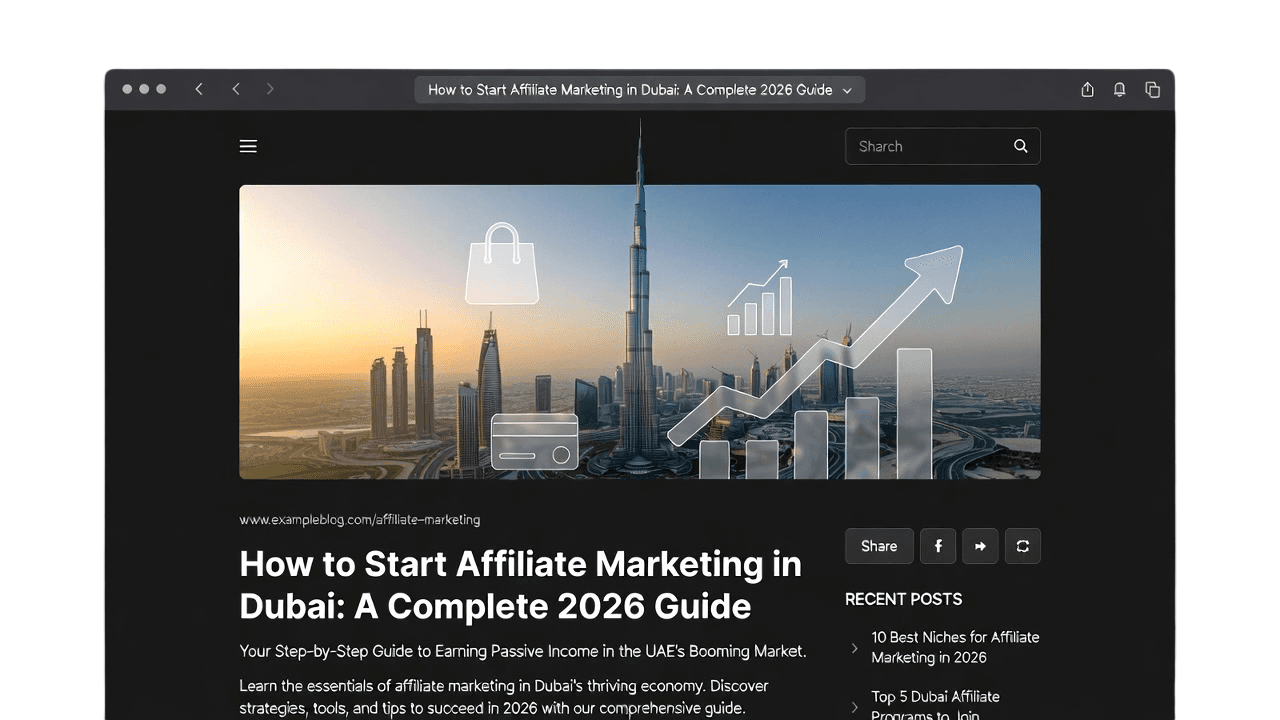
How to Start Affiliate Marketing in Dubai: A Complete 2026 Guide
Our Three Step Process
January 25, 2026
How to Start Affiliate Marketing in Dubai: A Complete 2026 Guide
A complete guide to affiliate marketing in Dubai. Learn licensing rules, top affiliate platforms, niche selection, and how to earn legally in the UAE.
Imagine this: you recommend a product or service to a friend, and when they buy it, you actually earn some cash. Sounds pretty interesting, right? That’s exactly what affiliate marketing is all about turning your influence, knowledge, or even simple online presence into a legitimate income stream, without needing your own products, inventory, or complicated logistics. In Dubai’s booming digital economy, this concept isn’t just a side hustle, it's a real opportunity to build a sustainable, scalable business legally and strategically.
Whether you’re a blogger, social media influencer, freelancer, or aspiring digital entrepreneur, by the end of this article you’ll have a step-by-step strategy to launch and grow a compliant, profitable affiliate marketing business in Dubai.
Why Affiliate Marketing Is a Smart Business in Dubai
Dubai’s digital landscape is booming. With high internet penetration, a large expatriate population with strong purchasing power, and an increasingly e-commerce savvy market, affiliate marketing offers a low-risk, high-potential opportunity for anyone who can build attention and trust online.
💡 You don’t need inventory, manufacturing, or customer support - you just need the right strategy and audience.
But this is crucial in Dubai and the wider UAE, affiliate marketing is considered a commercial activity, and you must comply with licensing, advertising, and media regulations to operate legally and sustainably.
Table of Contents
What Is Affiliate Marketing?
Why Dubai Is a Great Market for Affiliates
Legal and Licensing Requirements in Dubai/UAE
Step-by-Step Guide to Getting Started
Choosing the Right Niche and Affiliate Programs
Affiliate Marketing Platforms in Dubai & UAE
Building Your Platform & Audience
Traffic Strategies That Work in 2026
Monetization & Revenue Strategies
Tools, Tech, and Tracking Essentials
Compliance & Best Practices
Common Mistakes to Avoid
Case Studies & Example Roadmaps
1. What Is Affiliate Marketing?
Affiliate marketing is a performance-based business model where you promote other people’s products or services online. When someone clicks your affiliate link and makes a purchase, you earn a commission typically between 3% and 20% depending on the program and product category.
Unlike selling your own product, affiliates can focus on audience building and content creation while leveraging third-party brands to fulfil transactions.
2. Why Dubai Is a Great Market for Affiliates
Dubai offers strategic advantages for affiliate marketers:
High internet & mobile penetration
Strong consumer purchasing power
Growing e-commerce ecosystem
Tax-friendly & business-oriented environment
The key to success here is not just reaching audiences but being fully compliant with local business laws and media standards.
3. Legal and Licensing Requirements in Dubai/UAE
Affiliate marketing in Dubai is legal, but it is considered a commercial activity, which means you must comply with local regulations.
Types of Licenses You May Need
Trade License (Commercial License) – Required for regular revenue generation. Obtainable from Dubai Department of Economy & Tourism (DET) or free zones like DMCC, TECOM, IFZA, RAKEZ.
Freelance Permit – For solo affiliates or content creators.
Media / Influencer License - Required if promoting affiliate links via social media. Apply through National Media Council (NMC) after obtaining a trade license.
VAT and Tax Rules
No personal income tax
Businesses exceeding AED 375,000 turnover must register for VAT
Compliance ensures long-term sustainability and protects you from legal risks.
4. Step-by-Step Guide to Getting Started
Step 1 - Choose Your Business Model
Blog/website
YouTube channel
Social media (Instagram, TikTok, Snapchat)
Email newsletter
Paid advertising campaigns
Step 2 - Register Your Business
Choose Jurisdiction: Mainland vs Free Zone
Select License Type: E-commerce, advertising, or media
Apply for Trade License
Get Media/Influencer License
Open UAE Bank Account
💡 Freelance permits work well for individual influencers or solo marketers.
Step 3 - Build Your Platform
Website / Blog: SEO-optimized content for UAE audiences
Video Channels: YouTube, TikTok, Instagram
Email: Capture and nurture subscribers
Step 4 - Choose Affiliate Programs
Start small. 2-5 programs aligned with your niche.
5. Choosing the Right Niche
Focus on audience specificity:
Travel & experiences
Luxury fashion
Tech gadgets
Fitness & supplements
Finance & investments
Beauty & skincare
Parenting & lifestyle
Local relevance is key. For example, promote UAE-specific deals or travel packages.
6. Affiliate Marketing Platforms in Dubai & UAE
Choosing the right platform improves revenue, reliability, and compliance.
Global Platforms
Platform | Best For | Notes |
Amazon.ae | Beginners, blogs | 4–15% commission, trusted |
ShareASale | Bloggers, SaaS | Thousands of global brands |
CJ Affiliate | Authority sites | Premium brands, detailed reporting |
Impact.com | Influencers | Enterprise-level partnerships |
UAE & Middle East - Focused Platforms
Platform | Best For | Notes |
ArabClicks | UAE bloggers & influencers | Supports Noon, Namshi, Ounass, SHEIN |
Admitad | Content creators | UAE-specific campaigns |
TrakAff | Beginners | Local advertiser focus |
Direct Brand Affiliate Programs
Brand | Category | Notes |
Noon | E-commerce | High conversion, UAE-focused |
H&M, Adidas, Sephora, Namshi | Fashion & lifestyle | Good for Instagram/TikTok |
Booking.com, Expedia, Klook | Travel | Tourism-driven revenue |
Compliance tip: Always use affiliate disclosure and ensure UAE licensing.
7. Building Your Platform & Audience
Website / Blog: SEO-optimized articles
Video Channels: YouTube, TikTok shorts, Instagram reels
Email Marketing: Capture leads and promote affiliate offers
Consistency is critical for both SEO and trust-building.
8. Traffic Strategies That Work in 2026
SEO: Local UAE keywords, in-depth content
Social Media: Instagram, TikTok, YouTube
Paid Ads: Facebook, Instagram, TikTok campaigns
Email Marketing: Targeted affiliate promotions
9. Monetization & Revenue Strategies
Affiliate commissions
Bonus payouts from networks
Email funnels
Seasonal campaigns (e.g., Dubai Shopping Festival)
Key metrics: CTR, conversion rate, revenue per visitor.
10. Tools, Tech, and Tracking Essentials
Category | Tools |
Website | WordPress, hosting |
SEO | SEMrush, Ahrefs |
Analytics | Google Analytics |
Link Tracking | Bitly, Pretty Links |
Email Marketing | Mailchimp, ConvertKit |
Affiliate Tracking | Dashboard + UTM links |
11. Compliance & Best Practices
Disclose affiliate links
Follow UAE consumer protection laws
Respect cultural norms in content
Adhere to PDPL (data privacy) rules
12. Common Mistakes to Avoid
❌ Operating without correct license
❌ Over-promoting unrelated products
❌ Ignoring local SEO
❌ Neglecting audience engagement
❌ Relying on a single traffic source
13. Case Studies & Roadmaps
Beginner Roadmap (0 - 6 Months)
Pick niche
Build blog & social channels
Register trade + media license
Join 3–5 affiliate programs
Publish weekly content
Grow email list
Growth Roadmap (6 - 24 Months)
Launch paid ads
Test landing pages
Partner with local brands
Scale high-performing funnels
14. Conclusion Your Dubai Affiliate Journey Starts Today
Affiliate marketing in Dubai is not only legal - it’s a promising revenue stream. Understanding compliance, choosing the right niche, building platforms, and driving traffic smartly will help you create a sustainable business. If you are a Brand looking to start affiliate marketing journey with experienced team and increase your revenue we are here for you
A complete guide to affiliate marketing in Dubai. Learn licensing rules, top affiliate platforms, niche selection, and how to earn legally in the UAE.
Imagine this: you recommend a product or service to a friend, and when they buy it, you actually earn some cash. Sounds pretty interesting, right? That’s exactly what affiliate marketing is all about turning your influence, knowledge, or even simple online presence into a legitimate income stream, without needing your own products, inventory, or complicated logistics. In Dubai’s booming digital economy, this concept isn’t just a side hustle, it's a real opportunity to build a sustainable, scalable business legally and strategically.
Whether you’re a blogger, social media influencer, freelancer, or aspiring digital entrepreneur, by the end of this article you’ll have a step-by-step strategy to launch and grow a compliant, profitable affiliate marketing business in Dubai.
Why Affiliate Marketing Is a Smart Business in Dubai
Dubai’s digital landscape is booming. With high internet penetration, a large expatriate population with strong purchasing power, and an increasingly e-commerce savvy market, affiliate marketing offers a low-risk, high-potential opportunity for anyone who can build attention and trust online.
💡 You don’t need inventory, manufacturing, or customer support - you just need the right strategy and audience.
But this is crucial in Dubai and the wider UAE, affiliate marketing is considered a commercial activity, and you must comply with licensing, advertising, and media regulations to operate legally and sustainably.
Table of Contents
What Is Affiliate Marketing?
Why Dubai Is a Great Market for Affiliates
Legal and Licensing Requirements in Dubai/UAE
Step-by-Step Guide to Getting Started
Choosing the Right Niche and Affiliate Programs
Affiliate Marketing Platforms in Dubai & UAE
Building Your Platform & Audience
Traffic Strategies That Work in 2026
Monetization & Revenue Strategies
Tools, Tech, and Tracking Essentials
Compliance & Best Practices
Common Mistakes to Avoid
Case Studies & Example Roadmaps
1. What Is Affiliate Marketing?
Affiliate marketing is a performance-based business model where you promote other people’s products or services online. When someone clicks your affiliate link and makes a purchase, you earn a commission typically between 3% and 20% depending on the program and product category.
Unlike selling your own product, affiliates can focus on audience building and content creation while leveraging third-party brands to fulfil transactions.
2. Why Dubai Is a Great Market for Affiliates
Dubai offers strategic advantages for affiliate marketers:
High internet & mobile penetration
Strong consumer purchasing power
Growing e-commerce ecosystem
Tax-friendly & business-oriented environment
The key to success here is not just reaching audiences but being fully compliant with local business laws and media standards.
3. Legal and Licensing Requirements in Dubai/UAE
Affiliate marketing in Dubai is legal, but it is considered a commercial activity, which means you must comply with local regulations.
Types of Licenses You May Need
Trade License (Commercial License) – Required for regular revenue generation. Obtainable from Dubai Department of Economy & Tourism (DET) or free zones like DMCC, TECOM, IFZA, RAKEZ.
Freelance Permit – For solo affiliates or content creators.
Media / Influencer License - Required if promoting affiliate links via social media. Apply through National Media Council (NMC) after obtaining a trade license.
VAT and Tax Rules
No personal income tax
Businesses exceeding AED 375,000 turnover must register for VAT
Compliance ensures long-term sustainability and protects you from legal risks.
4. Step-by-Step Guide to Getting Started
Step 1 - Choose Your Business Model
Blog/website
YouTube channel
Social media (Instagram, TikTok, Snapchat)
Email newsletter
Paid advertising campaigns
Step 2 - Register Your Business
Choose Jurisdiction: Mainland vs Free Zone
Select License Type: E-commerce, advertising, or media
Apply for Trade License
Get Media/Influencer License
Open UAE Bank Account
💡 Freelance permits work well for individual influencers or solo marketers.
Step 3 - Build Your Platform
Website / Blog: SEO-optimized content for UAE audiences
Video Channels: YouTube, TikTok, Instagram
Email: Capture and nurture subscribers
Step 4 - Choose Affiliate Programs
Start small. 2-5 programs aligned with your niche.
5. Choosing the Right Niche
Focus on audience specificity:
Travel & experiences
Luxury fashion
Tech gadgets
Fitness & supplements
Finance & investments
Beauty & skincare
Parenting & lifestyle
Local relevance is key. For example, promote UAE-specific deals or travel packages.
6. Affiliate Marketing Platforms in Dubai & UAE
Choosing the right platform improves revenue, reliability, and compliance.
Global Platforms
Platform | Best For | Notes |
Amazon.ae | Beginners, blogs | 4–15% commission, trusted |
ShareASale | Bloggers, SaaS | Thousands of global brands |
CJ Affiliate | Authority sites | Premium brands, detailed reporting |
Impact.com | Influencers | Enterprise-level partnerships |
UAE & Middle East - Focused Platforms
Platform | Best For | Notes |
ArabClicks | UAE bloggers & influencers | Supports Noon, Namshi, Ounass, SHEIN |
Admitad | Content creators | UAE-specific campaigns |
TrakAff | Beginners | Local advertiser focus |
Direct Brand Affiliate Programs
Brand | Category | Notes |
Noon | E-commerce | High conversion, UAE-focused |
H&M, Adidas, Sephora, Namshi | Fashion & lifestyle | Good for Instagram/TikTok |
Booking.com, Expedia, Klook | Travel | Tourism-driven revenue |
Compliance tip: Always use affiliate disclosure and ensure UAE licensing.
7. Building Your Platform & Audience
Website / Blog: SEO-optimized articles
Video Channels: YouTube, TikTok shorts, Instagram reels
Email Marketing: Capture leads and promote affiliate offers
Consistency is critical for both SEO and trust-building.
8. Traffic Strategies That Work in 2026
SEO: Local UAE keywords, in-depth content
Social Media: Instagram, TikTok, YouTube
Paid Ads: Facebook, Instagram, TikTok campaigns
Email Marketing: Targeted affiliate promotions
9. Monetization & Revenue Strategies
Affiliate commissions
Bonus payouts from networks
Email funnels
Seasonal campaigns (e.g., Dubai Shopping Festival)
Key metrics: CTR, conversion rate, revenue per visitor.
10. Tools, Tech, and Tracking Essentials
Category | Tools |
Website | WordPress, hosting |
SEO | SEMrush, Ahrefs |
Analytics | Google Analytics |
Link Tracking | Bitly, Pretty Links |
Email Marketing | Mailchimp, ConvertKit |
Affiliate Tracking | Dashboard + UTM links |
11. Compliance & Best Practices
Disclose affiliate links
Follow UAE consumer protection laws
Respect cultural norms in content
Adhere to PDPL (data privacy) rules
12. Common Mistakes to Avoid
❌ Operating without correct license
❌ Over-promoting unrelated products
❌ Ignoring local SEO
❌ Neglecting audience engagement
❌ Relying on a single traffic source
13. Case Studies & Roadmaps
Beginner Roadmap (0 - 6 Months)
Pick niche
Build blog & social channels
Register trade + media license
Join 3–5 affiliate programs
Publish weekly content
Grow email list
Growth Roadmap (6 - 24 Months)
Launch paid ads
Test landing pages
Partner with local brands
Scale high-performing funnels
14. Conclusion Your Dubai Affiliate Journey Starts Today
Affiliate marketing in Dubai is not only legal - it’s a promising revenue stream. Understanding compliance, choosing the right niche, building platforms, and driving traffic smartly will help you create a sustainable business. If you are a Brand looking to start affiliate marketing journey with experienced team and increase your revenue we are here for you
Other Blogs
Other Blogs
Check our other project Blogs with useful insight and information for your businesses
Other Blogs
Other Blogs
Check our other project Blogs with useful insight and information for your businesses